
Differentiating Writing Instruction for Below-Level and EL Students
Writing is a challenging task, especially for fourth graders, when expectations are higher. The focus is on sentence structures, grammar, transition words, and text structure, just to name a few. Combine that with students below reading level or EL students, and the writing block can be challenging. However, finding ways to differentiate for those students and modify the writing process can make it more enjoyable for all.
Breaking It Down
Telling students they have to write five-paragraph essays multiple times throughout the school year can be overwhelming and cause unnecessary stress. Yes, they will be expected to have that as a finished product, but everything always seems easier when broken into parts.
I tried something new last year, and while it didn’t work for all my students, the feedback I received from some was positive. After introducing the prompt and going over the expectations, it was time to start with the introduction. For this, I had students take out a blank sheet of notebook paper and write “Introduction” at the top. After teaching the lesson, students wrote their introduction and then turned it in. Now, this does not happen in one day, as Simplify Writing does a great job of breaking down the introduction into parts. For students who struggle with putting sentences together to form a paragraph, this “simplifies” it even further. Each paragraph of the essay is completed this way: one piece of notebook paper labeled with what section of the essay it is, and then it is all stapled together at the end. Once this whole process is completed, they are ready for the next step in the writing process.
Meet Them Where They Are
Last year, I had a student who told me on day one, “I can’t read.” When tested, his fluency was 5 words per minute, at a kindergarten level. I also had a student who fit the definition of stubborn. He could read and do the work, but always refused. Having a student who couldn’t and one who wouldn’t was handled similarly. Sometimes it isn’t about the prompt or the structure; it is about getting them excited or just willing to write. For these two students, I spent a little more time breaking down the process further and focusing on their strengths.
Drawing is a great way to spark students' creativity. Having them draw a picture of something that they are interested in is a good starting point. Once they have completed their drawing, have them tell you about it. Depending on where they are, you can write what they say or have them write it. Eventually, you want them to take over the writing. When students tell me they don’t know what to write, I remind them that they tell stories all the time; all they need to do is write them down. When a student would come up to me and start telling their story, I would immediately say that it sounded like a great story that I would love to read later when they wrote it. This works great when students are writing their narrative essays. Students would write it down as it came to them, and we could fine-tune it later.
Informative or explanatory writing is another challenge in itself. Brainstorming with students is very important because if they know a lot about or enjoy their topic, it will be easier for them to do the research. When students start researching, it is important to have several books available to them, even though most will prefer to get online. It is important to have approved sites available so students can get reliable sources. I started by having students write down facts they found that they could use, then had them put the information into their own words. During the research process, I had my two students start by writing down five facts about their topic. Once they had five facts, I kept having them add facts one at a time until they had ten. These ten facts were then turned into a paragraph written in their own words. While it may not have been the assignment, it gave them something to be proud of. Using precise praise and building their confidence is also important in writing.
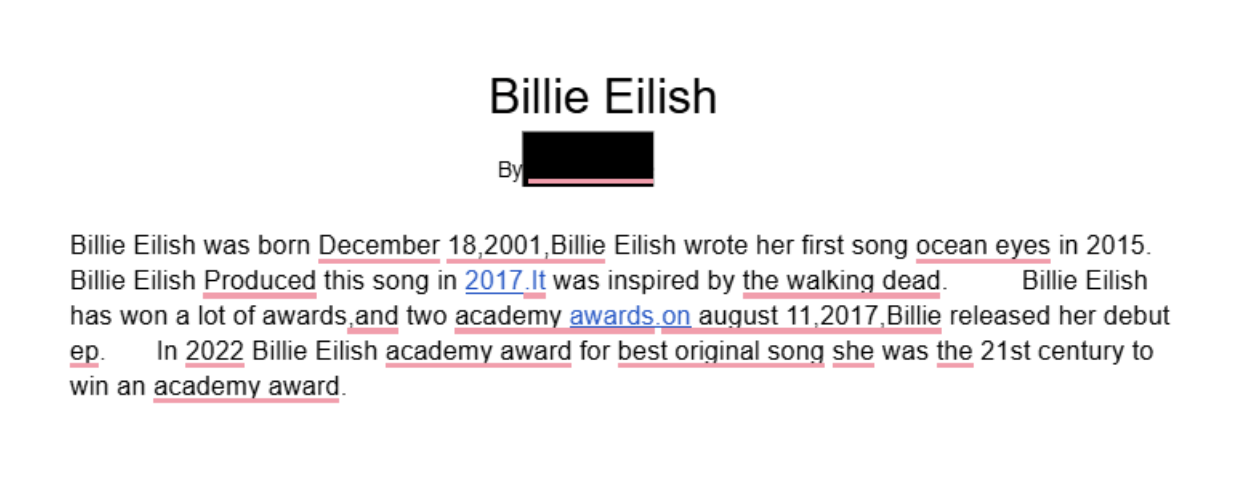
Student Sample - Below Level Writer
Writing with EL Students
In the past five years of teaching, I’ve had anywhere from three to eight students whose primary language wasn’t English. This year, I had a student who spoke a few words of English, so I knew I would have to approach many things differently with them. These students face a huge challenge: not only learning a whole new language but also meeting grade-level standards while navigating a space with others they may not understand. Again, my focus was on figuring out how to differentiate my instruction, make them feel included, and build their confidence.
For this student, I focused on her strengths. I discovered early on that she wrote, read, and spoke Spanish very well. I allowed her to write in Spanish while working with her to translate it into English. This helped her get excited about writing, as she was able to express herself comfortably, and I assisted by showing her how it translated into the language she was learning.
Other considerations when working with these students include using visuals and Google Translate to assist with communication. This student was able to have her computer set up in Spanish, allowing her to research more easily. It is important, however, not to have them rely fully on their native language, as part of the learning process is understanding and communicating in English.
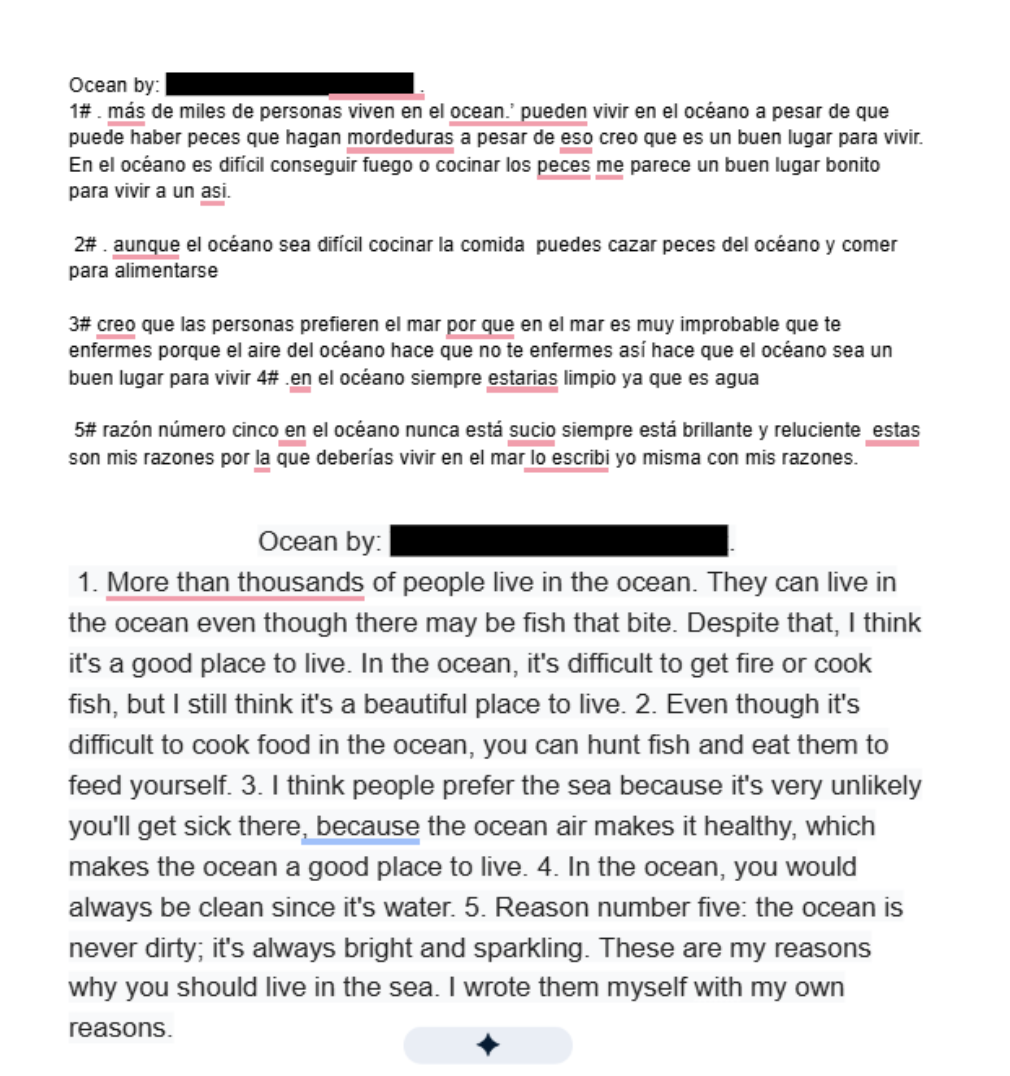
Student Sample - English Language Learner
I Leave You With This
As a teacher and someone who has always done pretty well with writing, I think about all the struggles I still have as I finish this article. First, it has taken me several days to do, and I second-guess everything I write. I also struggle to sit and write for long periods. If I find challenges in writing, imagine those students who are getting their first experience with it. Some students will take it in stride; they will be given the prompt, taught the lessons, and be able to create some amazing work. Those students will need little guidance, which allows for more focus on others.
To overcome the challenges of writing, students must first possess confidence. My job is to teach them how to write and all of the components of writing. Without confidence, some students do not even want to attempt to write. It is important to praise students for what they do and then help them improve it or show them how.
Next, there needs to be patience from both the teacher and the student. The writing process is lengthy and can be overwhelming for a student who struggles with reading and/or expressing their thoughts. This is where you, as the teacher, may need to differentiate some of the process, including spending more or less time on certain parts. It may also be necessary to step away from it, taking breaks or focusing on another task for a while, then coming back to it.
At the end of the writing process, when the final draft has been completed and turned in, get excited with students about completing something they may have thought was too daunting at first. Celebrate their accomplishments with a small celebration or by allowing them to share it with others. If time allows, letting them get up and share with the class makes them feel proud of themselves and excited to want to do it again when you are ready to start the next writing assignment. A great example is a living wax museum. Our students researched and wrote about a famous person. When they were finished, students had an essay they could use to write a speech as the person they wrote about. This turned into a great presentation that allowed them to share their work with the rest of the school.
The hardest part was always grading their work and then having to give them a lower score. This was my opportunity to sit with them and explain that even though they didn’t get the grade they wanted, they accomplished so much. I would go over everything they did well and discuss areas where we needed to work. Students need to know that they are always improving, and it gets better with time and practice. As the American cartoonist George Evans said, “Every student can learn and succeed, just not on the same day, or in the same way.”
Marlana Zank
Marlana Zank is a fourth-grade teacher entering her sixth year at Marshall Intermediate School in Marshall, Missouri. She enjoys creating a calm, cozy learning environment that helps her students succeed. Her favorite part of the school day is storytime with her class, where she can introduce them to new and exciting adventures. Teaching is a learning experience in itself, and she is always looking for ways to improve and to help others. In addition to teaching, she enjoys spending time with her husband and three kids, as well as crafting and reading.
